
What Is Egg Freezing: A Guide to Fertility Preservation in Bangkok
Center : Nakornthon Gift Fertility Center
Article by : Dr. Ong-Arj Bovornsakulvong
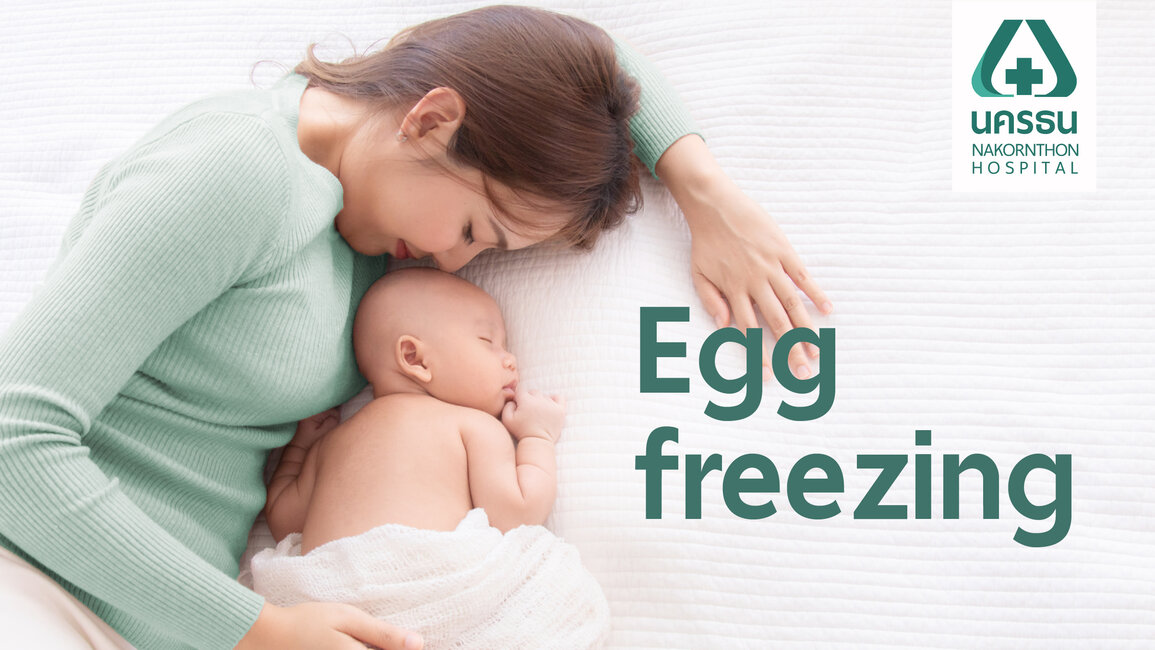
Egg freezing, or oocyte cryopreservation, is a modern medical procedure that offers an alternative option for families planning to have children in the future, women who want to have children but are not yet ready, those with infertility issues, or those with health problems that may affect their reproductive health.
Nakornthon GIFT Fertility Center at Nakornthon Hospital has a team of reproductive medicine specialists and experienced scientists ready to provide consultation and care for those who wish to freeze their eggs for future pregnancy at an appropriate time, using modern treatment tools and technologies for successful pregnancies.
Table of Contents
- What is Egg Freezing?
- Why Choose Egg Freezing?
- Who Is Egg Freezing Suitable For?
- How Should You Prepare For Egg Freezing?
- The Egg Freezing Process
- Post-Procedure Care
- Egg Freezing Cost in Bangkok - What to Expect
- How Effective is Frozen Egg Storage (Success Rates)?
- Why Choose Egg Freezing at Nakornthon Gift Fertility Center in Bangkok?
- Egg Freezing: Taking Control of Your Fertility
- Frequently Asked Questions (FAQs) About the Egg Freezing Process in Bangkok
- Free Online Consultation with a Specialist
What is Egg Freezing?
What is egg freezing? Egg freezing (oocyte cryopreservation) is a process in which reproductive cells, called "eggs," that have been stimulated are retrieved from the body and frozen at an extremely cold temperature of -196 degrees Celsius. The number of eggs collected depends on each woman's monthly egg supply, with an average of 10-15 eggs. However, for healthy women with a higher egg count, collection can reach 20-30 eggs.
Egg freezing has become increasingly popular as a fertility preservation method in Thailand. It has become an important option for women who wish to preserve their egg quality due to aging or health issues, or for future family planning. The egg freezing process typically begins with hormone stimulation to produce multiple eggs, followed by retrieval under sedation and specialized freezing techniques that maintain egg viability for future use.
Why Choose Egg Freezing?
Egg freezing is an assisted reproductive technology that allows women to preserve the quality of their eggs for future use. Here are the benefits and reasons why egg freezing at our Bangkok hospital should be considered:
- Women are born with a limited number of eggs, and both the quantity and quality of eggs decline with age.
- Women who plan to have children after age 35, or who are not ready for children now; egg freezing will allow them to use higher-quality eggs later.
- It reduces the risk of age-related infertility and allows you to choose the most appropriate time to have a child.
- It prevents infertility due to medical treatments, such as chemotherapy or radiation, which can damage eggs.
- Increases future options for IVF or ICSI procedures, allowing you to use your own eggs.
Who Is Egg Freezing Suitable For?
The egg freezing process is especially suitable for:
- Women who are not yet ready to have children, especially those over 35 years of age.
- Patients who are about to undergo chemotherapy or radiation treatment that may affect the quantity and quality of egg cells.
- Individuals with chromosomal abnormalities that may cause premature menopause.
- Those requiring ovarian surgery for cysts or tumors.
At What Age Should You Freeze Your Eggs?
Many women wonder what the ideal age for egg freezing is and what the factors for success are. The egg freezing process can be done at any age, but freezing eggs before the age of 35 yields the highest quantity and quality of eggs. Success rates decrease as age increases, particularly among those 40 and older. It is generally recommended to freeze approximately 15 eggs.
How Should You Prepare For Egg Freezing?
To ensure that the egg freezing process goes smoothly and efficiently, preparation is key:
- Consult with a fertility specialist for an overall health and ovarian health assessment.
- Take supplements as recommended by a doctor, such as antioxidants, vitamin D, and folic acid.
- Exercise regularly and maintain a healthy weight
- Get adequate rest and at least 8 hours of sleep per night.
- Avoid smoking, drinking alcohol, and stress.

The Egg Freezing Process
The egg freezing process takes approximately 2–3 weeks from preparation to retrieval and freezing at leading fertility centers offering egg freezing programs in Bangkok. This involves:
Initial Health Screening & Medical Examination
- Blood tests for infectious diseases (such as HIV, Hepatitis B, Hepatitis C, Syphilis, etc.) and genetic disorders such as Thalassemia
Ovarian Stimulation & Preparation
- Hormone medication to stimulate the production of multiple eggs for collection in a single procedure.
Egg Retrieval
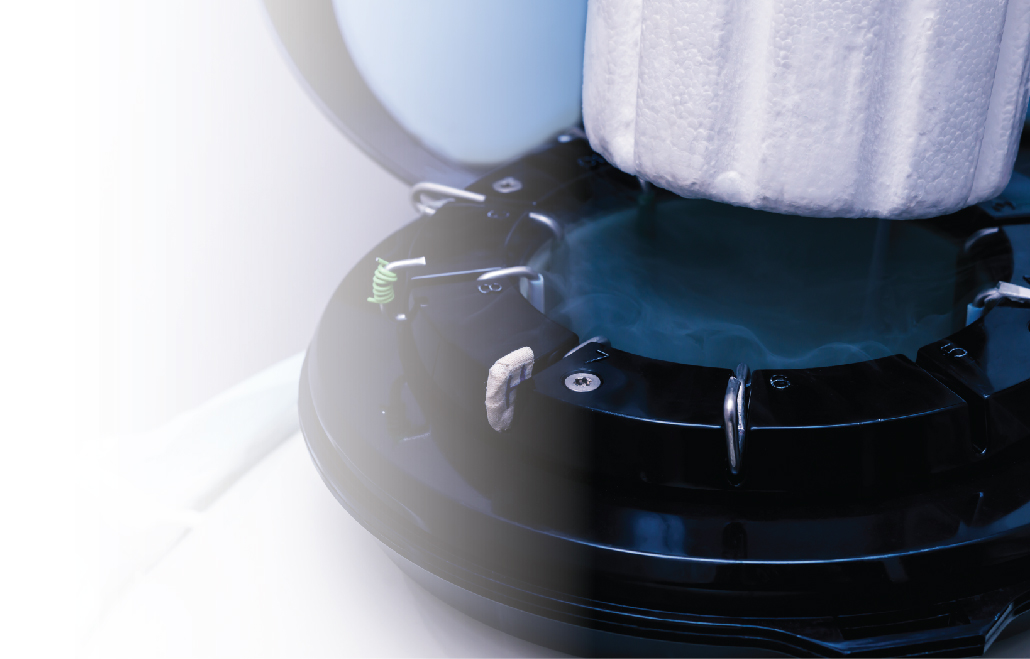
The process is similar to IVF. Eggs are retrieved through transvaginal aspiration, selected for quality, and stored in liquid nitrogen in a temperature-controlled laboratory until needed.
Post-Procedure Care
Proper care after egg retrieval helps recovery and reduces the risk of complications. Here are important self-care guidelines following the egg freezing process:
- Rest adequately for at least 1-2 days after the egg collection procedure.
- Avoid strenuous exercise or lifting heavy objects for one week.
- Mild discomfort or pain in the lower abdomen may occur; take pain medication as prescribed by your doctor.
- Seek immediate medical attention for abnormal symptoms, such as a high fever, severe abdominal pain, or unusual bleeding.
- Eat a nutritious diet high in protein, vegetables, and fruits, and stay hydrated.
- Abstain from sexual intercourse for at least one week to prevent infection.
- Avoid consuming spicy, fermented foods and alcohol.
Egg Freezing Cost in Bangkok — What to Expect
At Nakornthon GIFT Fertility Center, Nakornthon Hospital, we offer an egg freezing package priced at 169,000 Baht*. The comprehensive package includes all necessary steps:
- Up to 2,400 units of ovarian stimulation medications
- Ovulation prevention medications
- Trigger shot for egg maturation
- Ultrasound monitoring of follicle development
- Egg retrieval and quality selection procedures by specialist
- Freezing of the first 10 eggs (storage for 1 year)
- Standard-compliant egg cryopreservation storage facilities
Our patients receive care from a dedicated team of fertility specialists, experienced and well-trained embryologists, and professional nurses who provide expert care throughout the entire egg freezing process.
*The price is applicable only to foreigners residing in ThailandHow Effective is Frozen Egg Storage (Success Rates)?
Egg freezing stops the aging process of eggs at the age they were retrieved. On average, about 80-90% of frozen eggs are viable after thawing. The woman's age at the time of egg freezing is a crucial factor in determining the chances of success.
How Long Can Eggs Be Stored?
In principle, eggs can be frozen and stored as long as cooling agents are maintained. Successful cases have been recorded with eggs frozen for 14 years, which were successfully used. However, it is recommended to use frozen eggs before the age of 40-45, as pregnancies beyond this age may encounter more complications.
Additional Information About Egg Freezing
- The most effective egg freezing method is vitrification.
- The ideal age for egg freezing is 34-37 years, as beyond this age, both the quantity and quality of eggs decrease.
- The cost of an egg freezing package is comparable to an IVF cycle, with additional annual storage fees.
- Typically, about 15-20 eggs are needed to increase the chance of one successful pregnancy.
- Frozen egg cells have thicker, harder shells, so ICSI (Intracytoplasmic Sperm Injection) is needed for fertilization. This method involves injecting a single sperm cell into an egg cell (one sperm per egg).
- Under Thai law, a marriage certificate is not required for egg freezing, but it is necessary when you wish to fertilize them for pregnancy.
Why Choose Egg Freezing at Nakornthon Gift Fertility Center in Bangkok?
When considering egg freezing in Bangkok, Nakornthon Gift Fertility Center offers comprehensive services. Our package includes unlimited units of stimulation medication, ovulation prevention medication, egg-maturing injections, ultrasound monitoring, and expert retrieval/selection. We provide storage for the first 10 eggs (for 1 year) in a standard facility with a dedicated team of specialists, scientists, and nurses caring for you at every step.
Egg freezing: Taking Control of Your Fertility
Egg freezing provides peace of mind about egg quality despite aging concerns, health issues, or lifestyle choices. It allows women to take control of their future fertility. For personalized advice, consult our reproductive medicine specialists at Nakornthon Gift Fertility Center.
For expats living in Thailand who are considering having children in the future, or for those experiencing fertility challenges, Nakornthon Hospital offers world-class fertility services, including egg freezing and egg quality selection, with the support of highly trained medical professionals. The hospital's team of fertility experts and advanced medical equipment ensure that your fertility preservation process is handled with the utmost care and expertise.
For more information, please contact:
- Facebook Fanpage: Nakornthon Hospital - International Patient
- LINE Official: @nakornthoninter
- Tel: 02-450-9999 1159-1160
Frequently Asked Questions (FAQs) About the Egg Freezing Process in Bangkok
-
Q: Can single women freeze their eggs in Thailand?
A: Yes. Under Thai law, single women can undergo egg freezing without a marriage certificate. You do not need to be in a relationship or married to preserve your eggs. However, Thai law does require a marriage certificate if you later wish to use your frozen eggs for fertilization. Our team at Nakornthon Gift Fertility Center can walk you through what this means practically during your consultation.
-
Q: How many eggs do I need to freeze at Nakornthon Gift Fertility Center to have a realistic chance of pregnancy?
A: Most fertility specialists recommend aiming for 15–20 mature eggs to give yourself a reasonable probability of achieving one successful pregnancy. That said, the number that is right for you depends on your age, egg quality, and how your body responds to stimulation. Some women reach this number in a single cycle; others may choose to do two cycles to build up their reserve. Your doctor will discuss realistic expectations based on your individual results.
-
Q: Do I need to stay in Bangkok for the entire egg freezing process?
A: The stimulation and monitoring phase typically spans 10–14 days, during which you will need to attend several ultrasound appointments. Egg retrieval takes place at the end of this window. If you are coming from outside Thailand, plan to be in Bangkok for approximately 2–3 weeks to complete a full cycle.
-
Q: Is the egg freezing procedure painful?
A: The egg retrieval itself is performed under sedation, so you will not feel anything during the procedure. Afterward, it is common to experience some mild cramping, bloating, or lower abdominal discomfort for a day or two, similar to period pain. Most women feel well enough to return to light activities within 48 hours. The stimulation injections are self-administered, and most patients find them manageable with a brief demonstration from our nursing team.
-
Q: What happens to my frozen eggs if I change my mind or no longer need them?
A: Your eggs remain in storage as long as you continue to pay the annual storage fee. If you decide you no longer want to use them, you have several options: you can have them discarded, donate them to research (subject to applicable Thai law), or, in some cases, donate them to other patients. Our team at Nakornthon Gift Fertility Center will discuss all available options with you and ensure any decision is handled according to your wishes and current regulations.
Free Online Consultation
Article of Nakornthon Gift Fertility Center


Infertility: A Common Reproductive Issue That Can Prevent Pregnancy


Embryo Chromosome Screening Using NGS: A Technique for Detecting Fetal Abnormalities Before Pregnancy